
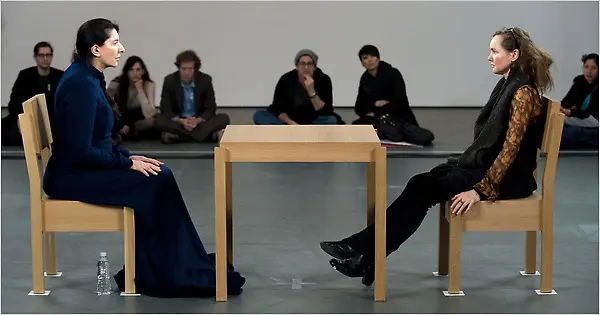
The focus of this class is aesthetic experience—hearing an opera, taking a walk through an arboretum, perhaps even eating a delicious meal. How do aesthetic experiences relate us to the world? Do they generate knowledge? And what, if anything, is this knowledge knowledge of?
Aesthetic experience seems to have a distinctly pleasant or unpleasant character, insofar as we like or dislike what we experience. A crucial part of aesthetic life is making aesthetic judgments: evaluations (the opera is beautiful) and property ascriptions (the tree is majestic). How do aesthetic experiences enable us to make these judgments? Are there objective truths about aesthetic reality that form standards of correctness for them? Are all disagreements about 'matters of taste' faultless, or can one party be wrong about whether something is cool, beautiful, or funny?
Perhaps we are subjectivists who think that aesthetic objects' value is constituted by our subjective responses. But if not, are facts about beauty part of empirical science, or something else entirely? If our subjective responses are merely matters of desire, why do we so often agree about aesthetic matters?
We begin with some contemporary philosophical theories of aesthetic experience and what is at stake between them. We then turn to a debate over disagreements in the evaluation of works of art, and how to make sense of ‘faultless’ disagreements. We will see how these contemporary debates were anticipated by early modern philosophers—Immanuel Kant and David Hume—each of whom took defining positions on the objectivity of taste. This historical grounding may allow us to make progress on the question of (if pleasant and unpleasant experiences of aesthetic objects (art, nature, etc) allow us to make aesthetic assessments) how these affective states can be objectively grounded. We will relate these questions in aesthetics to the philosophy of emotion—specifically theories about how affect or emotion put us in touch with value. Finally, aesthetic value has been thought to present a special challenge within value theory (the part of philosophy that tries to understand what value is and how it relates to sentient beings), and we will consider a debate over this question.
Aesthetic experience seems to have a distinctly pleasant or unpleasant character, insofar as we like or dislike what we experience. A crucial part of aesthetic life is making aesthetic judgments: evaluations (the opera is beautiful) and property ascriptions (the tree is majestic). How do aesthetic experiences enable us to make these judgments? Are there objective truths about aesthetic reality that form standards of correctness for them? Are all disagreements about 'matters of taste' faultless, or can one party be wrong about whether something is cool, beautiful, or funny?
Perhaps we are subjectivists who think that aesthetic objects' value is constituted by our subjective responses. But if not, are facts about beauty part of empirical science, or something else entirely? If our subjective responses are merely matters of desire, why do we so often agree about aesthetic matters?
We begin with some contemporary philosophical theories of aesthetic experience and what is at stake between them. We then turn to a debate over disagreements in the evaluation of works of art, and how to make sense of ‘faultless’ disagreements. We will see how these contemporary debates were anticipated by early modern philosophers—Immanuel Kant and David Hume—each of whom took defining positions on the objectivity of taste. This historical grounding may allow us to make progress on the question of (if pleasant and unpleasant experiences of aesthetic objects (art, nature, etc) allow us to make aesthetic assessments) how these affective states can be objectively grounded. We will relate these questions in aesthetics to the philosophy of emotion—specifically theories about how affect or emotion put us in touch with value. Finally, aesthetic value has been thought to present a special challenge within value theory (the part of philosophy that tries to understand what value is and how it relates to sentient beings), and we will consider a debate over this question.
- Teacher: Sofia Berinstein