
- Teacher: Mark Wallace
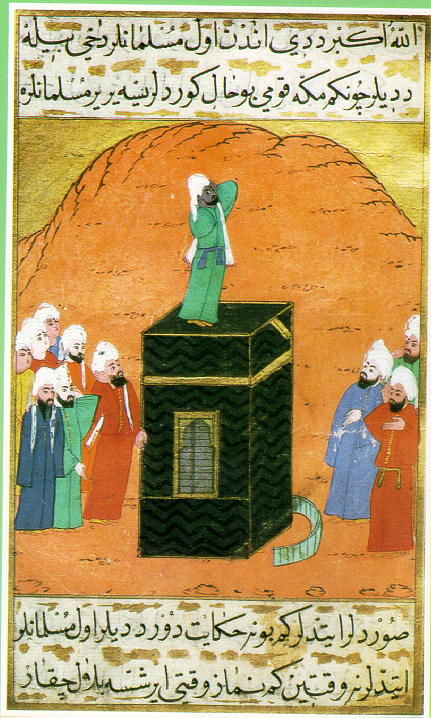
A survey of the history of Islamic law and its developments, with particular attention to the ways in Islamic legal principles were formed, organized, operated in practice, and changed over time. It will focus on issues in Islamic legal theory, methodology, constitutional law, personal law, and family law that have had the greatest relevance to our contemporary world. This course functions as both a basic introduction to the Islamic legal system in its pre-modern and contemporary forms. The course will also provide comparative discussion of the contrasts between Islamic legal theory and positive law and European and American legal and constitutional thought. The course will be divided into four sections: 1) basic legal theory (the “sources of the law,” uṣūl al-fiqh) with concentration on the methods for deriving specific laws 2) theory and practice of the application of law within local pre-modern contexts 3) the emergence of the modern nation-state and the accommodation of Islamic constitutional models to European/American legal systems 4) Islamic law in modernity and post-modernity (examination of cases in family law, constitutional law from two countries that assert contemporary claims to Islamic legal legitimacy, specifically Iran and Pakistan).
- Teacher: Tariq al-Jamil

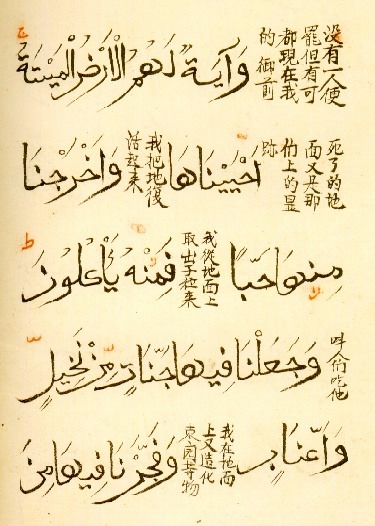
This course conceives of the Qur’ān as a living text in constant flux through interactions with the lived experiences of Muslims and other religious traditions. It focuses on developing an understanding of the Qur’ān’s form, style, and content through a close reading of comparable religious texts. Major topics covered include the Qur’ānic theory of prophecy, its treatment of the Biblical tradition (both that of the Hebrew Bible and the Christian Bible), and its perspective on pre-Islamic religion. The central goals of the course include the ability to (a) analyze primary these religious sources from a critical and literary perspective and (b) construct coherent arguments based on concrete evidence from the textual sources. In a class of this nature, class participants will likely hold or develop a wide variety of opinions about the topics covered. The goal is not to adopt a single opinion concerning the interpretation of a particular text, but rather to support one’s personal conclusions in a clear and coherent manner based on concrete evidence from the course materials.
- Teacher: Tariq al-Jamil