
 220117_r39712.jpg
This course is designed to prepare the students of fourth-year Chinese for further language and cultural studies at graduate level and help them achieve the “Advanced-plus” level of proficiency in Mandarin Chinese, meaning the students should be able to perform all Advanced-level tasks (including reading, listening, speaking and writing) with linguistic ease, confidence, and competence. In order to achieve this goal, it is necessary for the students to be able to read original and authentic Chinese writings and to understand thoroughly the grammatical, idiomatic and cultural dimensions of these writings, further developing their linguistic and analytical skills based on the readings. This course will cover fictional works authored by major writers in modern and contemporary Chinese world.
Students will be introduced to the significant topics and authors concerning the century-long Chinese cultural and social changes. All the texts are original. Vocabulary list will be provided. Class instruction and discussion, conducted only in Chinese, will focus on close reading, accompanied with a less proportion of grammar practices. The texts will also serve as models of writing and literary creation. All the materials used in this course will be uploaded to the Moodle site.
Students will be introduced to the significant topics and authors concerning the century-long Chinese cultural and social changes. All the texts are original. Vocabulary list will be provided. Class instruction and discussion, conducted only in Chinese, will focus on close reading, accompanied with a less proportion of grammar practices. The texts will also serve as models of writing and literary creation. All the materials used in this course will be uploaded to the Moodle site.
- Teacher: Yuan Gao

- Teacher: Ju-hui Chiu
- Teacher: Claire Li
- Teacher: Wol A Kang
- Teacher: Kirsten Speidel
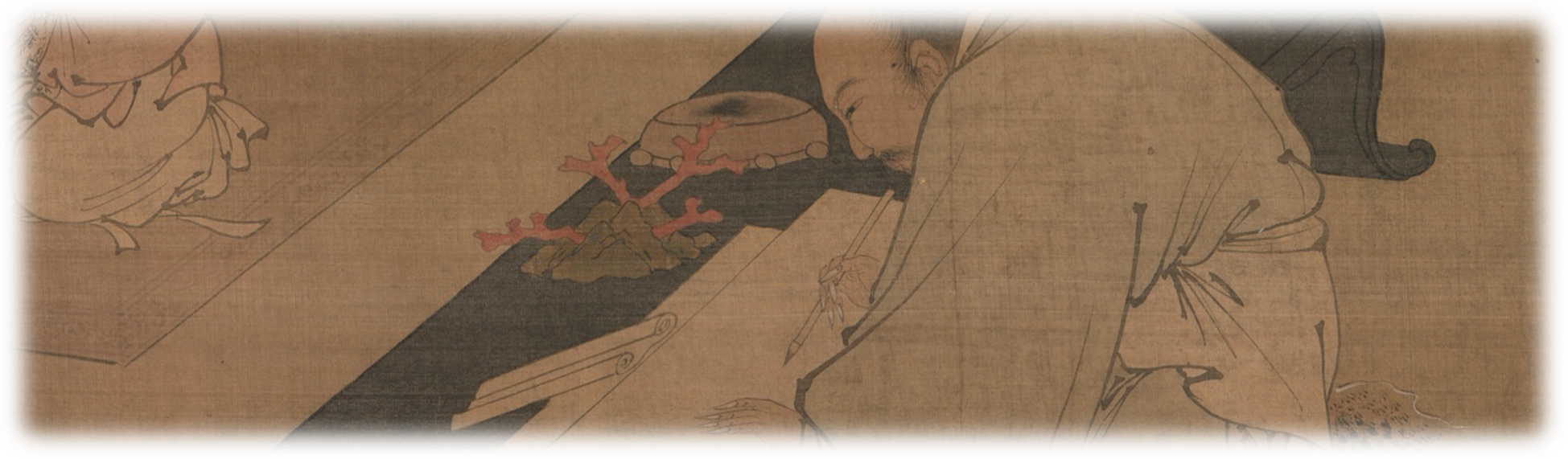
Classical Chinese (gu hanyu 古漢語) is the spoken and written language of the period of ca. 5th century BCE to ca. 1st century CE. It is the language in which most of the texts from that period are written and the basis for later development into Literary Chinese (wenyanwen 文言文). In the context of premodern Asia, it also served as the lingua franca of the elites in Japan, Korea, and Vietnam. The importance of the language remains also in modern Chinese as well as a group of regional dialects, with which it actually competes as a symbol of erudition and prestige.
In this introductory class, we will progress from the smaller elements of the language to its larger components and finally to a selection of short passages in their entirety. We will look at syntactic functions of individual words, typical sentence patterns, and the basic functions of the various grammatical particles that very much structure the sentences. On that basis, we will also learn to use the best of the reference materials so far available, conduct rigorous grammatical analysis, and translate the language in its different forms and genres into English. By the end of the semester, you will have gained the knowledge, skill, resources, and cultural background to continue the study of Classical Chinese either in a more advanced course or on your own.
This course does not require knowledge of Mandarin, although a year or two of beginning Chinese will certainly be helpful.
In this introductory class, we will progress from the smaller elements of the language to its larger components and finally to a selection of short passages in their entirety. We will look at syntactic functions of individual words, typical sentence patterns, and the basic functions of the various grammatical particles that very much structure the sentences. On that basis, we will also learn to use the best of the reference materials so far available, conduct rigorous grammatical analysis, and translate the language in its different forms and genres into English. By the end of the semester, you will have gained the knowledge, skill, resources, and cultural background to continue the study of Classical Chinese either in a more advanced course or on your own.
This course does not require knowledge of Mandarin, although a year or two of beginning Chinese will certainly be helpful.
- Teacher: Yalin Du